7 Food Safety Tips for Home and Restaurants : A Simple Guide to Safe Cooking
Today, food safety in home and restaurants is more important than ever. Whether you’re preparing dinner for your family or managing a restaurant kitchen, food hygiene helps you protect health, avoid foodborne illness, and build trust.
In this blog, you’ll learn practical, easy to follow food safety practices for home kitchens and important food safety standards in restaurants and cloud kitchens. No matter who you are a home cook, a mom, a chef, or a business owner, this guide will help you cook with confidence and care.
Food Safety Practices for Home Kitchens
Clean cooking starts at home. It’s easy to overlook small steps that can make a big difference in safety.
These are some key foodsafety practices for home kitchens:
1. Wash Hands and Surfaces
⇒ Always wash hands before and after cooking.
⇒ Clean your counters, knives, and cutting boards regularly.
2. Keep Raw and Cooked Food Separate
⇒ Don’t use the same tools for raw meat and vegetables.
⇒ Prevent raw juices from touching cooked or ready-to-eat food.
3. Store Food the Right Way
⇒ clean containers with lids.
⇒ Keep raw meat on the lower fridge shelf.
⇒ Label and use leftovers within 2–3 days.
4. Cook and Reheat Properly
⇒ Make sure food is cooked all the way through.
⇒ Reheat until it’s hot and steaming.
These simple habits reduce risks and make your kitchen safer every day.
Smart Storage Tips for Home Kitchens
Proper food storage is key to keeping ingredients fresh and preventing cross-contamination. Follow these smart storage habits to keep your home kitchen safe:
⇒ Use transparent, airtight containers for dry items like rice, flour, and snacks to avoid moisture and pests.
⇒ Label leftovers with the date to track freshness and reduce waste.
⇒ Avoid over packing the fridge, which blocks airflow and affects temperature control.
⇒ Keep dairy and eggs in the middle shelf—not in the door where temperature fluctuates.
These small adjustments help maintain hygiene and reduce spoilage, saving money while protecting
your family’s health.
Food Safety Standards in Restaurants & Cloud Kitchens
Are you running a food business? Then you must follow foodsafety standards in restaurants and cloud kitchen strictly.
These steps protect your customers and your brand.
1. Train Your Staff
⇒ Everyone should know the basics: washing hands, using gloves, and keeping clean.
⇒ Regular training keeps everyone sharp and safe.
2. Use Color-Coded Tools
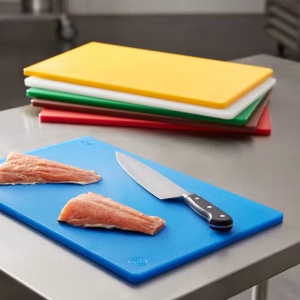
⇒ Use different cutting boards and knives for meats, vegetables, and dairy.
⇒ Label containers clearly to avoid confusion.
3. Follow FSSAI Guidelines
⇒ Make sure your restaurant is registered and follows all safety rules.
⇒ Focus on pest control, waste management, and proper food storage.
4. Keep an Eye on Temperature
⇒ Cold food should stay below 5°C.
⇒ Hot food must stay above 60°C.
⇒ Use thermometers to check regularly
Even small errors can cost a lot in a professional kitchen, so consistency is key.
Food Safety Audit in Restaurants and Cloud Kitchens
Conducting regular food safety audits ensures that all protocols are being followed consistently. It also builds customer trust and protects your brand image.
Here’s what to include in a basic weekly audit:
⇒ Check for expired products and proper labeling
⇒ Inspect kitchen hygiene and waste disposal areas
⇒ Review staff hygiene practices and tool usage
⇒ Ensure pest control and ventilation systems are working
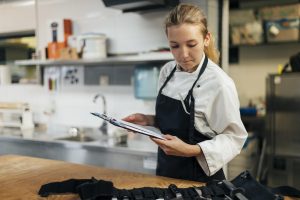
Consider using a digital checklist or even a laminated printed sheet. A simple 10-minute audit can prevent serious issues and keep your kitchen running efficiently and safely.
Common Food Safety Mistakes in Kitchens
Avoiding these common foodsafety mistakes in kitchens can prevent sickness and food spoilage:
⇒ Using the same knife for raw meat and vegetables
⇒ Leaving cooked food out for too long
⇒ Not checking expiry dates on sauces or dry goods
⇒ Reusing dirty sponges and cloths
⇒ Storing food uncovered in the fridge
These may seem small but they can be dangerous. Stay alert and make better choices.
How to Improve Food Safety at Home and in Restaurants
Want to improve your kitchen hygiene? Here’s how to improve food safety at home and in restaurants:
⇒ Teach everyone involved the right practices
⇒ Keep all tools and surfaces clean and dry
⇒ Use reminders or checklists to stay on track
⇒ Review your habits and make small changes often
Improving food safety doesn’t cost money—it just takes care and attention.
Conclusion
Good food isn’t just about taste , it’s about safety and satisfaction. Whether you’re cooking at home or running a busy kitchen, food safety in home and restaurants is something to take seriously.
Stick to foodsafety practices for home kitchens, follow food safety standards in restaurants and cloud kitchens, use a daily food safety checklist, and avoid common food safety mistakes in kitchens. Keep improving with small changes and smart habits.
Because clean food is not just healthy food , it’s happy food.
WRITTEN BY
NAEEM NAZAR
A PASSIONATE CHEF | DIGITAL MARKETER | VISUAL THINKER
01/07/2025
KANNUR
Follow my instagram for more updates :
